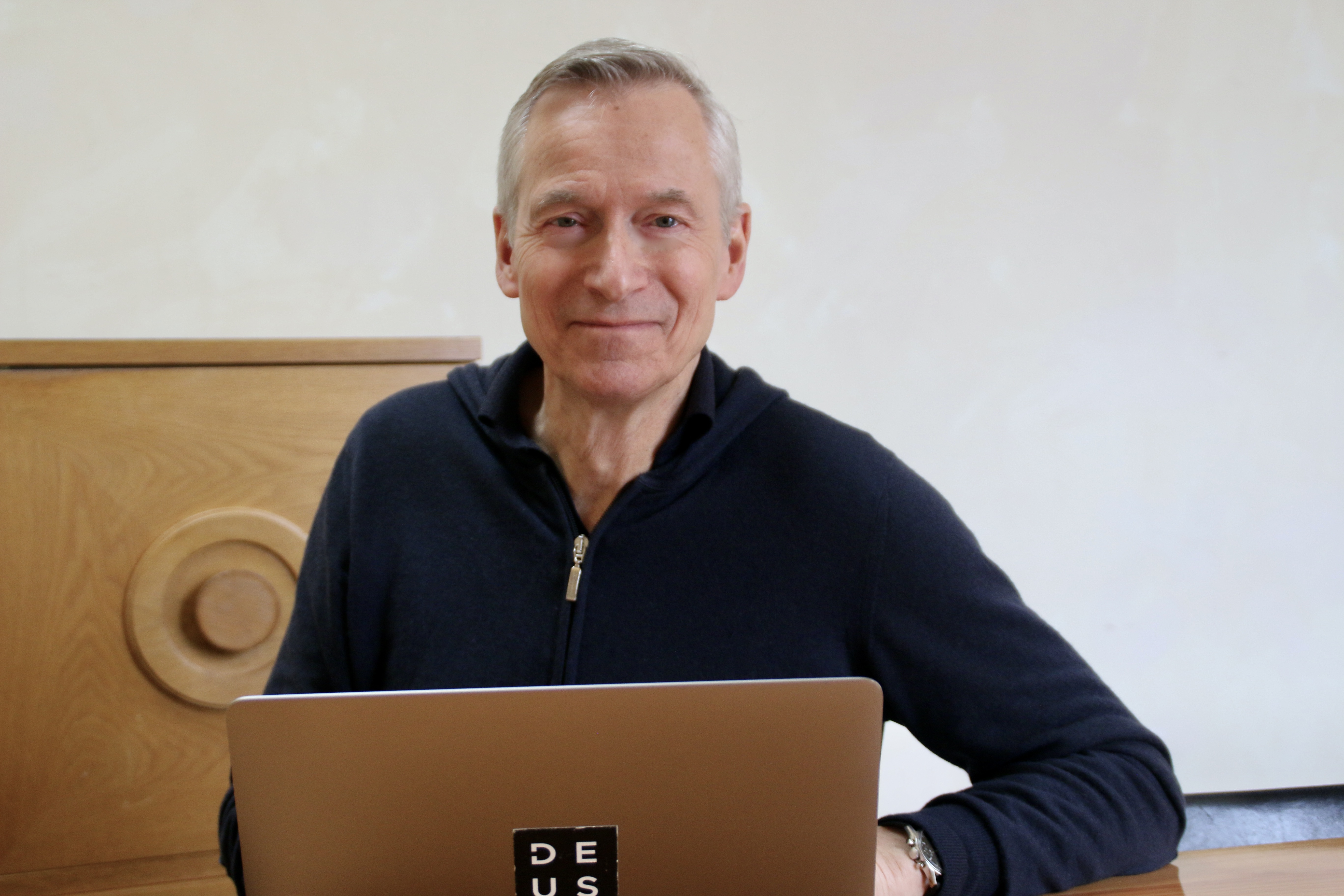
We meet in Amsterdam, at Fosbury's — a former operating theatre now repurposed as a workplace. A fitting setting for a conversation about transformation.
When AI became a boardroom matter
For Ron Vrijmoet, the realisation came early that AI would become more than a technological innovation. Even before founding DEUS AI in early 2020, he was already in conversation with executives and organisations about how they were handling data and intelligence.
"What we saw back then," he says, "was that AI was still very conceptual. The technology was in its infancy and the business impact was hard to articulate." That changed rapidly with the rise of large language models. From that point on, it became clear that not just the technology itself, but above all its integration into the organisation, would determine success.
Balancing technology and change
DEUS AI therefore made a deliberate choice from the start: technology alone is not enough. Equally important is how people work with it.
The organisation was built around two equally strong pillars:
- a data and AI-driven technology group
- a design and change-oriented discipline, focused on adoption and organisational change
"That balance is crucial," Vrijmoet says. "You can build the best AI solution, but if the organisation doesn't move with it, you create no value."
Practising what you preach
As an AI company, you cannot afford to stay at arm's length from practice. DEUS therefore applies AI structurally to its own ways of working.
No report is written or designed entirely by hand anymore. Developers write code in close collaboration with AI models. Processes are continuously scrutinised: what can be done smarter, faster, or more autonomously?
The biggest challenge? Not the technology — the people.
"Even in a young company, you see how quickly people get used to a certain way of working. Change requires that you deliberately let people feel uncomfortable."
Lead by example in the boardroom
According to Vrijmoet, AI adoption always starts at the top. Executives who see AI purely as a handy search tool are missing the point.
"The real value emerges when you look at your processes and ask yourself: what can I automate, delegate, or restructure with AI?"
Taking that step not only increases organisational effectiveness, but also a leader's own relevance. In that sense, AI is not a threat but an amplifier — provided you are willing to work with it.
From use cases to value creation
A common reflex in organisations is: "We're experimenting." But according to Vrijmoet, learning becomes problematic when it turns into an excuse to avoid making choices.
Every AI engagement DEUS starts therefore works with a value framework from day one:
- what is the goal?
- what value do we want to realise?
- how do we measure success?
This might relate to growth, customer value, or efficiency. In customer service environments, for example, NPS improvement and cost reduction are pursued simultaneously. Such goals can be defined upfront — and monitored.
Speed versus control: a false dilemma
Should executives choose between speed and control? According to Vrijmoet, that is an oversimplification.
"In sectors like finance you have to be fast, but also extremely careful." The solution lies in involving all relevant disciplines from day one: business, technology, risk, and governance.
Rather than silos, this creates a multidisciplinary team that collectively seeks the right balance. That need not slow things down — as long as boardroom support is explicit.
Build or buy?
The build-versus-buy dilemma also requires nuance. The key, according to Vrijmoet, lies in retaining strategic core positions within the organisation, such as:
- enterprise architecture
- product ownership
- technology leadership
This core is then supplemented with external expertise. In this way, you build knowledge internally while benefiting from experience already gained elsewhere. AI does not call for either/or, but for a considered mix.
Which roles are already changing?
Vrijmoet is clear: virtually every role where work takes place primarily in a digital environment will change fundamentally. Software development is already a visible example. Developers are increasingly working alongside AI that produces code at a junior-to-mid-level standard.
That shift is spreading rapidly to other domains, such as legal work, where AI increasingly acts as first reader, analyst, or assistant.
The technology is ready. Adoption will follow — perhaps a little more slowly, but inevitably.
Vendor lock-in as a strategic risk
One of the most underestimated dilemmas in the boardroom is vendor lock-in. The pace at which AI is evolving makes it risky to become too dependent on a single platform.
The answer lies in building modularly: architectures that make it possible to swap out components or models when needed. That requires thinking ahead — and sharp choices in infrastructure and contracts.
One piece of advice for executives
If Vrijmoet could give one piece of advice, it is this: get hands-on with it yourself.
"If you don't know how, ask your youngest colleagues. An AI generation is growing up now, just as the internet generation did before them."
Their way of working often opens eyes to what is possible — even in complex organisations.
AI is exciting. It raises questions about work and economic security. But it also offers extraordinary opportunities: access to knowledge, accelerated learning, and space for more human work.
The question is not whether AI will change leadership, but whether leaders are willing to actively shape that change.